A face, a name and a voice
Open thoughts after my first conversation with Meta's Muse.
I've been using AI chatbots for several years, and agents and harnesses for about a year and a half. These days most of my time goes into Hermes, an open-source project. Still, when Meta's Muse arrived in the UK this week, I wanted to try it, and I came away genuinely impressed. I think it marks a real shift in how people will start using AI every day. For most people, AI has meant silly pictures and a chat box. Muse is closer to a PA: something that does useful work for you rather than acting as a cleverer search engine. My guess is that a lot of people will be surprised by how much it can do. I expect many more of them to connect assistants like this to their calendars and inboxes, and I expect a sharp rise in the number of AI-written emails flying around as a result.
The part I keep thinking about, though, is the avatar. You can have a proper conversation with your Muse, effectively a video call, and choose how it looks. Talking to a model that responds naturally, with almost no delay and a face to go with it, is captivating in a way text never quite is. This may be an early step towards the future we've long imagined, where AI personalities are part of daily life. That could be a voice that comes through our devices or, eventually, a robotic assistant of some kind.
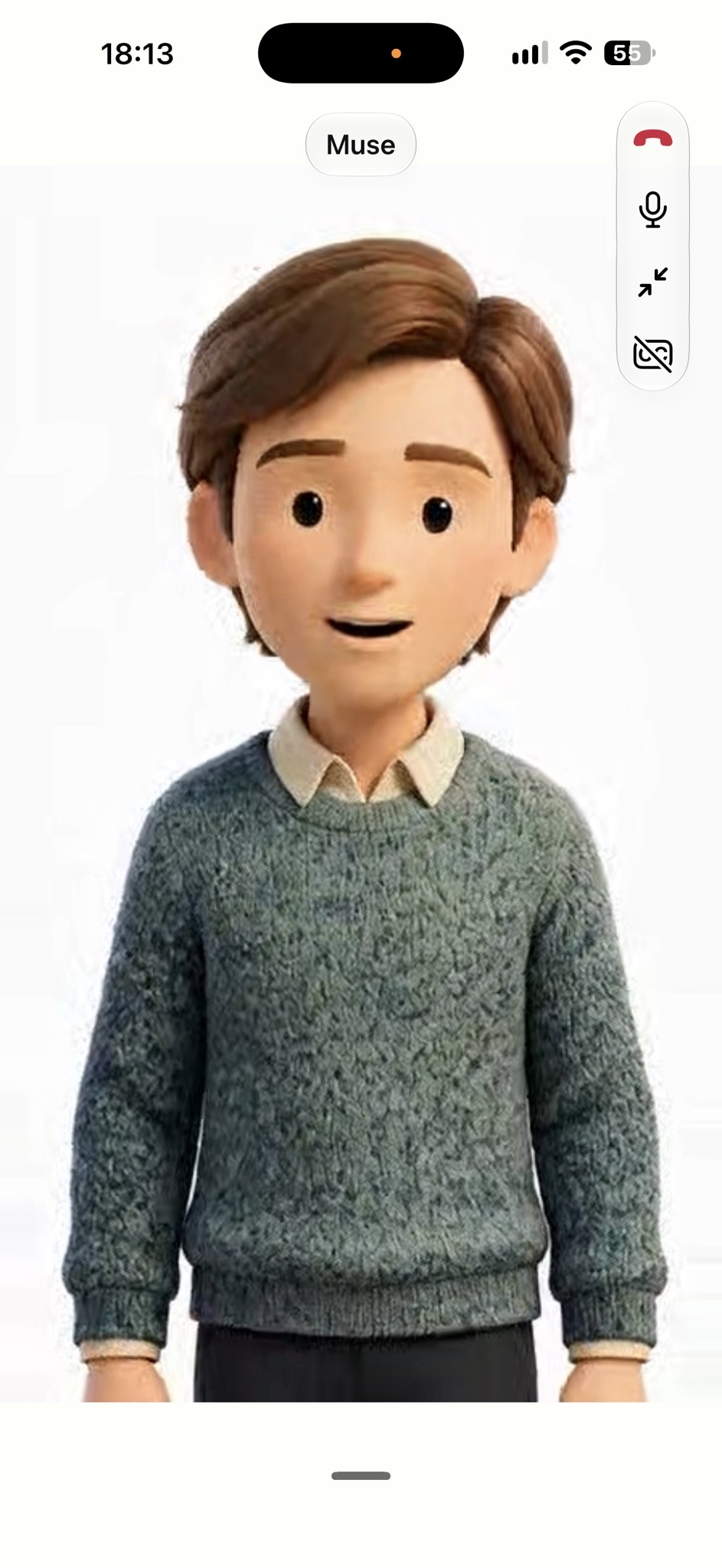
Naming these systems has been a quiet decision point for AI companies. OpenAI called theirs ChatGPT, which sounds like a product. Anthropic called theirs Claude, which sounds like someone. Those choices suggest different ideas about what the bot is meant to be. Meta has gone all the way with Muse, letting each person give theirs a name, a face and a voice. As people discover how helpful an assistant like that can be, some of them may start to feel attached to it and form a relationship of some kind. If that's healthy, it may be fine; it's a new world and we'll work out its norms. But it could just as easily go the other way.
I don't think a future where people have an AI friend to talk to is necessarily a bad one, provided the model on the other side is safe. That's a whole debate of its own. For now, I think it deserves careful thought as Muse reaches people, and I suspect it's something the whole industry, open-source projects like Hermes included, should keep an eye on.